

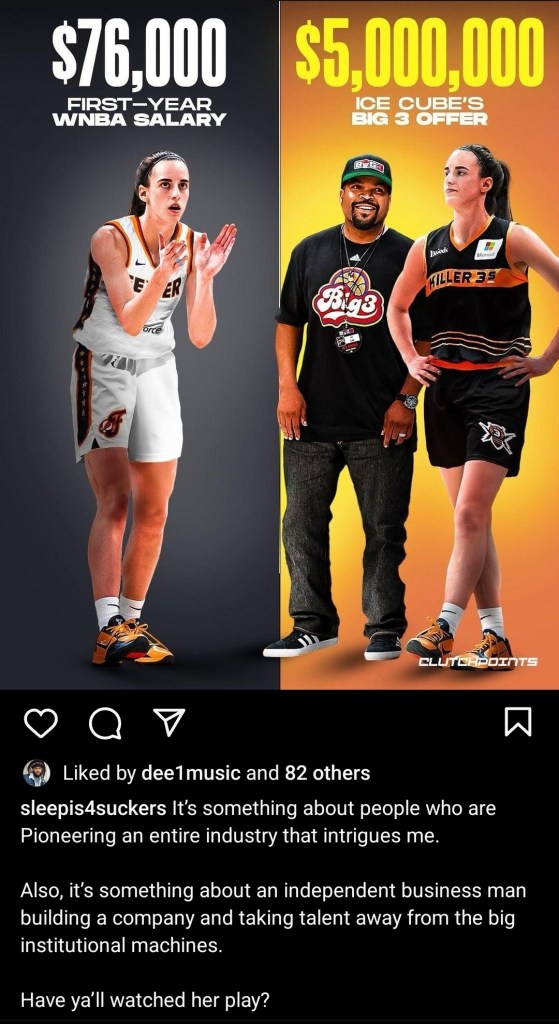
In sports, the stories we celebrate often revolve around legendary athletes, groundbreaking records, and moments that have left an indelible mark on history. Yet, behind these narratives lies a deeper, more complex story about the ecosystems that nurture these talents and the battles fought to redefine the boundaries of leagues and institutions. Recently, a conversation sparked by Ice Cube’s Big3 league offering Caitlin Clark a groundbreaking $5 million deal has illuminated a profound dialogue about the power of independent leagues in challenging established norms and reshaping the sports landscape. This discussion harks back to a pivotal “what if” in sports history, reminiscent of the impact the Negro Leagues could have had on Major League Baseball (MLB) had they possessed the resources to secure talents like Babe Ruth.
Reimagining the Power Dynamics in Sports
The essence of this conversation goes beyond the commendable achievement of an individual player or the success of a particular team. It touches upon the monumental potential of independent leagues to transform the sports industry from the ground up. The Big3’s offer to Caitlin Clark is not merely a contract; it’s a statement, a vision of what the future of sports could look like when the playing field is leveled, and talent is recognized and compensated, free from the constraints of traditional institutional frameworks.
Imagine a scenario where the Negro Leagues, in their heyday, had the financial clout to offer Babe Ruth a $500,000 contract. Such a move would have not only altered the course of baseball history but also signified a seismic shift in the dynamics of power, prestige, and influence in professional sports. The Negro Leagues, rich in talent but marginalized by the structures of racial segregation, represented a parallel universe of what baseball could be, filled with stars whose brilliance was dimmed only by the era’s pervasive inequality.
A Lesson in Resilience and Innovation
The Big3’s move, much like the hypothetical scenario with the Negro Leagues, speaks to a larger narrative about resilience, innovation, and the quest for equity in sports. It reflects an understanding that the value of independent leagues lies not only in their ability to showcase talent but also in their potential to challenge and disrupt the status quo. By offering Caitlin Clark a deal that dwarfs what she might earn in the WNBA, the Big3 is not just investing in a player; it’s investing in the future of the sport, signaling a shift towards a more inclusive, equitable, and dynamic model.
The Path Forward: Unity, Equity, and Representation
This dialogue opens up critical conversations about equity, representation, and the true value of an athlete’s contribution on and off the field. It underscores the necessity for the sports industry to embrace diversity, not just in terms of race and gender, but also in recognizing and supporting the variety of pathways athletes can take to professional success. The sports world thrives on competition, not just between players or teams, but between ideas about how best to recognize talent, structure leagues, and tell the stories that inspire us all.
The Big3’s groundbreaking offer is a step towards a future where independent leagues are not seen as stepping stones to more traditional paths but as valuable and esteemed destinations in their own right. This vision challenges us to reconsider what we value in sports, pushing towards a model that prioritizes innovation, equity, and the power of sports to unite and inspire across traditional boundaries.
As we look to the future, let us draw inspiration from the independent leagues that have paved the way with their resilience and innovation. Let’s envision a sports industry that values all athletes’ contributions, recognizes the power of diverse pathways to success, and champions the independent leagues that dare to dream big. In doing so, we honor not just the legends of the game but the spirit of competition and community that makes sports genuinely great for all.
 Thoughts Processed