

The NBA’s evolution is strategic, driven by a desire to enhance the game’s entertainment value.

There’s a widespread belief that today’s NBA players are significantly more athletic than those from the 90s. You often hear the claim that players today are faster, stronger, and jump higher. But is that truly the case? A closer look at the data and rule changes that have shaped the NBA suggests that while the game has certainly evolved, the perception of increased athleticism may be more about how the game is structured than actual physical superiority.
Combine Data: A Reality Check on Athleticism
Let’s start with the data. The NBA Combine, which has tested prospects’ physical abilities since 2000, provides a useful comparison of athletic metrics over the past two decades. When examining key metrics like the three-quarter court sprint, vertical leap, and bench press, these numbers haven’t significantly improved.
For example:
Speed: The average three-quarter court sprint time in 2000 was around 3.2 seconds, and it remained roughly the same in 2019.
Vertical Leap: Max vertical jumps for top prospects in 2000 were typically in the 35-40 inch range, which is still the case for most prospects in recent years.
Strength: Bench press results, measured by how many reps of 185 lbs a player can complete, have stayed consistent over the years, averaging around 15-20 reps.
These figures suggest that despite advancements in training, nutrition, and sports science, the raw athleticism of NBA players has not drastically changed. In other words, players today aren’t necessarily faster or stronger than those from the 90s, even if they appear to be because of the pace and style of the modern game.
The Impact of Rule Changes
The evolution of the NBA is less about changes in athleticism and more about changes in the rules. Rule adjustments over the past few decades have profoundly impacted how the game is played, leading to faster and higher-scoring games. Here are some of the key rule changes that have reshaped the league:
1979: Banning Hand-Checking
The removal of hand-checking allowed offensive players more freedom to move, making it harder for defenders to use physicality to slow them down. This rule change made the game faster because it allowed for more fluid offensive movement.
1980: The Introduction of the Three-Point Line
The addition of the three-point line revolutionized basketball by encouraging perimeter shooting. This spread the floor and opened up the game, leading to faster-paced offenses and higher scoring.
2004-05: Stricter Hand-Checking Enforcement
In 2004, the NBA took hand-checking rules to the next level by strictly forbidding the practice. This created even more space for perimeter players, driving scoring up and making the game feel faster, as defenders were forced to rely more on positioning than physicality.
2002: Legalizing Zone Defenses
While originally aimed at improving passing and ball movement, legalizing zone defenses was also a way to counter the dominance of physical post players like Shaquille O’Neal. This rule change subtly shifted the focus from interior play to perimeter shooting and ball movement, altering how the game was played.
2022: Crackdown on Flopping
In recent years, the NBA has taken steps to reduce the impact of flopping, which had become a tactic to draw cheap fouls. By reducing the number of fouls called for flopping, the league encouraged more continuous play and reduced stoppages, contributing to the perception of a faster game.
These rule changes were not about making the game more athletic, they were about making the game more open, faster-paced, and appealing to fans by increasing scoring. The NBA’s evolution is strategic, driven by a desire to enhance the game’s entertainment value.
Athleticism in the 90s
It’s also worth noting that players in the 90s were far from lacking athleticism. Stars like Michael Jordan, Scottie Pippen, Shaquille O’Neal, and Clyde Drexler were among the most physically gifted athletes of their time. However, they played in a different style of game, one that was more physical, slower-paced and focused on post-play and mid-range scoring.
In the 90s, the rules allowed for more contact, especially on the perimeter, which slowed down the game. Players couldn’t rely on the same level of freedom of movement that today’s stars enjoy. That doesn’t mean they were any less athletic; it just means they operated in a different system.
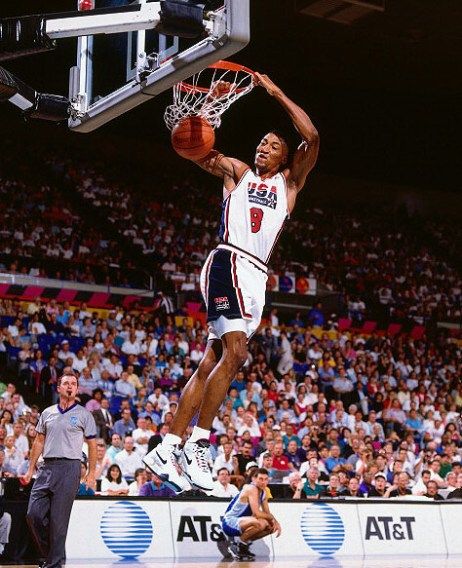
The data doesn’t support the idea that today’s NBA players are significantly more athletic than those from the 90s. The perception of increased athleticism reflects the rule changes that have sped up the game, created more open space on the court, and shifted the focus to perimeter play. Players from the 90s, who operated in a more physical and slower-paced era, would likely thrive under today’s rules, just as today’s stars excel in the current system. The evolution of the NBA is a testament to the league’s ability to adapt. Still, it’s important to recognize that the changes we see are driven more by strategy and rules than pure athleticism.
 Thoughts Processed