
The role of guards in the NBA has significantly transformed over the past few decades. Today’s guards are known for their shooting prowess, quickness, and ability to space the floor in a fast-paced, three-point-heavy league. However, in gaining these skills, the game has lost an essential component of guard play that was once prominent: the art of posting up and operating in the mid-post.
The Art of Post-Up Play
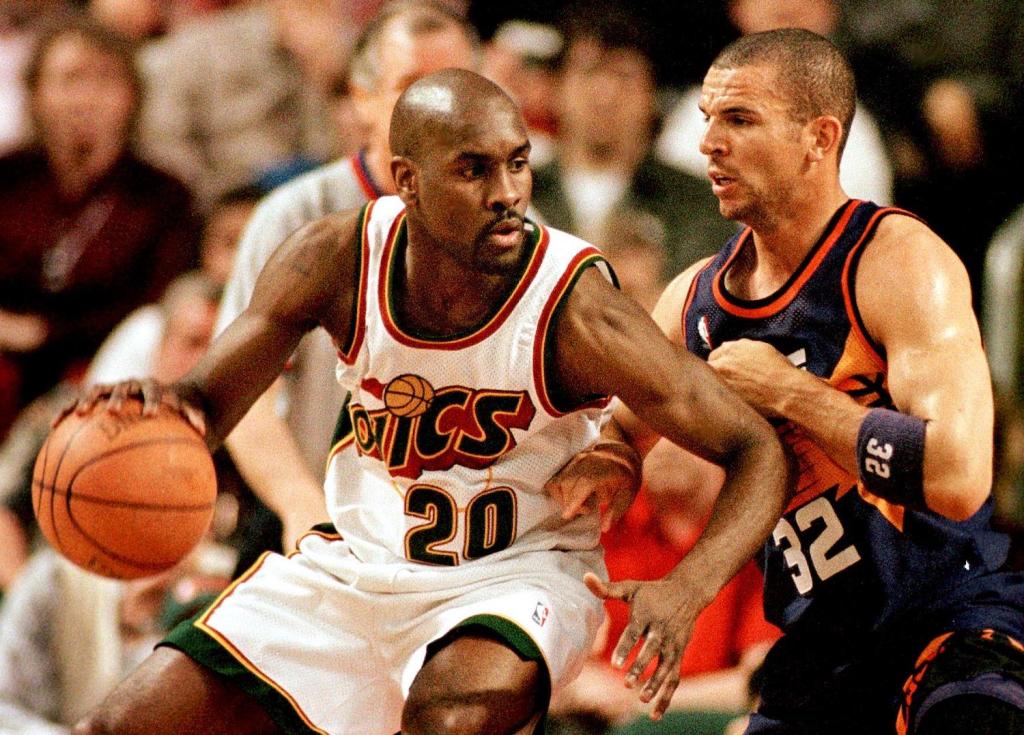
In the late 90s and early 2000s, several guards mastered the ability to post up and create offense from the low to mid-post area. Players like Mark Jackson, Sam Cassell, Gary Payton, Jason Kidd, and Chauncey Billups exemplified this style of play. These guards used their size, footwork, and basketball IQ to score and facilitate from positions closer to the basket, often taking advantage of mismatches against smaller or weaker defenders.
- Mark Jackson was a quintessential post-up guard. He backed down defenders and used his court vision to create plays for his teammates.
- Gary Payton, with his physicality, was a force in the post, scoring efficiently and controlling the pace of the game.
- Jason Kidd and Chauncey Billups also employed the post-up game to set up their offense, blending their scoring ability with their roles as primary playmakers.
- Sam Cassell used his craftiness in the post to hit mid-range jumpers and create opportunities for others.
These players weren’t just about shooting from a distance or running pick-and-rolls; they brought a physical element to guard play, using their strength and skill to dominate from the inside. Their post-up ability allowed them to slow down the game, control possessions, and facilitate from different areas on the court.
The Shift to Perimeter Play
Today’s NBA emphasizes pace and space, and guard play has adapted accordingly. Guards are expected to be excellent shooters, particularly from three-point range, and to operate in fast-paced offenses that prioritize ball movement and quick decision-making. The rise of analytics has further pushed teams to focus on high-efficiency shots, three-pointers, and layups at the expense of post-up and mid-range play.
While this has led to a more exciting, faster-paced game, it has also meant that the post-up skills once seen in guards are now rare. Modern guards are more likely to run pick-and-rolls, shoot off the dribble, or attack the basket than they are to back down their defenders in the post. The strategic focus on spacing has moved guards away from the post, making the mid-post area less of a focal point in offenses.
What We’ve Lost
In gaining perimeter skills, the league has lost some of the versatility that defined the guards of previous generations. The ability to post up and operate in the mid-post allowed guards to exploit mismatches, control the pace, and facilitate in ways that are less common today. Players like Mark Jackson, Gary Payton, and Chauncey Billups could impact the game from multiple areas on the court, using their physicality and basketball IQ to create opportunities for themselves and their teammates.
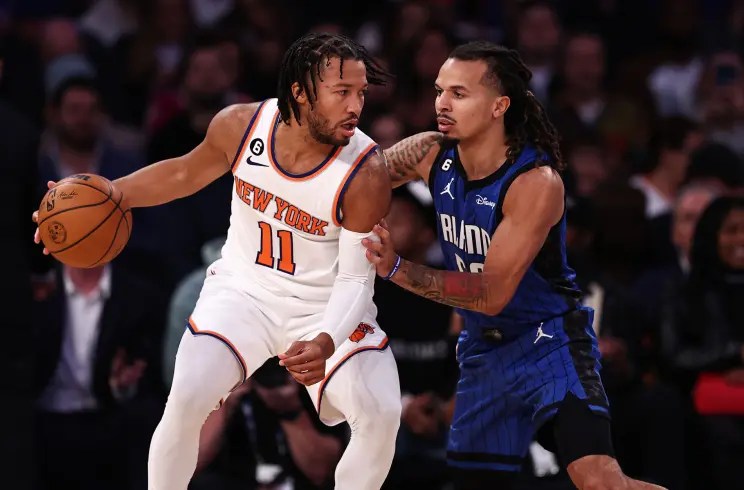
Today, only some guards consistently use the post-up as a weapon. One of the rare exceptions is Jalen Brunson, who has brought a throwback style to the modern NBA. Brunson’s ability to score and facilitate from the post is reminiscent of the guards from the late 90s and early 2000s. His size and footwork allow him to exploit mismatches, and his skill set contrasts the more perimeter-oriented style of most guards today including himself.
The evolution of guard play in the NBA has brought tremendous gains in perimeter shooting, speed, and spacing. However, in embracing these skills, the league has lost some of the versatility and craft that defined guards in previous eras. The art of post-up play, once a hallmark of great guards, has become less prevalent in today’s game. As the NBA continues to evolve, it’s worth remembering the value of post-up skills and their unique impact on the game. Players like Jalen Brunson remind us that even in a perimeter-dominated league, there’s still room for the post-up game, a skill that, while less common, remains valuable and effective.
 Thoughts Processed