

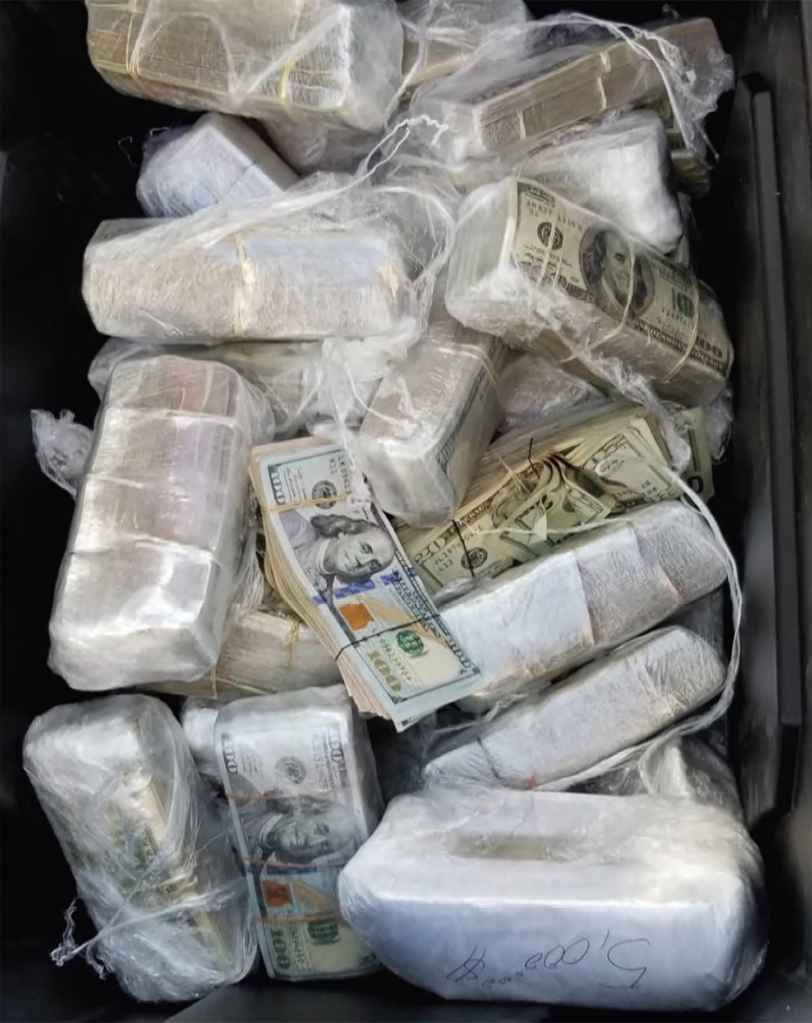
Recently, TD Bank, one of the largest financial institutions in North America, was caught laundering hundreds of millions of dollars for drug traffickers. The U.S. Department of Justice revealed that the bank allowed more than $470 million in illicit funds to flow through its system, much of it connected to dangerous drugs like fentanyl. Despite the enormity of the crime, TD Bank walked away with a fine of over $3 billion and a slap on the wrist. No executives are going to prison. No one at the bank is being held personally responsible. Instead, the institution will pay the penalty and continue business as usual. This blatant injustice should outrage us all.
This case reveals a deep problem in how justice is applied in America. When large corporations like TD Bank engage in criminal activity, they often avoid the harsh consequences that individuals face. The bank’s actions amount to facilitating the deadly drug trade. This operation devastates communities and fuels the same violence and addiction that many Black and Brown individuals are incarcerated for. Yet the bank walks away without seeing the inside of a courtroom, let alone a jail cell.
TD Bank’s Crimes: A RICO Case Without Prison Time
The scale of TD Bank’s involvement in laundering money is shocking. From 2014 to 2023, the bank failed to uphold anti-money laundering controls, allowing criminals to move massive sums of money through its accounts. In one particularly egregious example, a Chinese drug trafficking group bribed bank employees. It laundered nearly half a billion dollars connected to fentanyl and other drugs. Other schemes involved sending tens of millions of dollars to Colombia through similar channels.
If individuals on the streets had committed these crimes, there would be no hesitation in applying harsh prison sentences, often under laws like the RICO Act. RICO, or the Racketeer Influenced and Corrupt Organizations Act, is used to prosecute organized crime, and it has been responsible for putting away thousands of people, particularly Black and Brown individuals, for participating in drug conspiracies. These individuals face decades behind bars for small actions compared to the multi-billion-dollar crimes of a corporation like TD Bank. This stark contrast in consequences should compel us to demand change.
TD Bank’s crimes align closely with what a RICO case looks like a conspiracy, a network of actors, and large sums of dirty money. Yet, instead of being hit with RICO charges and prison time, the bank agreed to pay fines and penalties. The executives who benefitted from these transactions will continue their lives unscathed. This case is a clear example of how the system bends for powerful institutions, offering them ways out that are not available to ordinary people.
How TD Bank Got Away With It
The fact that TD Bank managed to escape with only financial penalties points to a broader issue in corporate crime. In cases involving banks and other large institutions, the focus is often on reforming practices and issuing fines rather than holding individuals accountable. This comes from a belief that corporate crimes are “mistakes” that can be corrected with better oversight rather than criminal actions with real victims.
TD Bank was able to use its status as a financial institution to shield its employees and executives from criminal prosecution. The system of corporate liability is designed to protect individuals at the top of these organizations. When the bank is caught in criminal activity, it pays a fine and moves on. The individuals responsible are rarely named, let alone prosecuted. This dynamic allows institutions like TD Bank to engage in criminal behavior with little fear of personal consequences.
This outcome also points to the unequal power dynamics at play in the justice system. Banks like TD have the financial resources and legal teams to negotiate settlements and avoid the most severe consequences. They can afford to pay billions in fines and continue operating, while ordinary people caught up in the drug trade, often out of desperation or lack of opportunity, face life sentences. It is not just about money—it is about how the system itself is designed to favor corporations over individuals.
The Double Standard in the Justice System
When we compare TD Bank’s settlement to the experiences of Black and Brown individuals in the justice system, the double standard is impossible to ignore. Many people in marginalized communities face severe prison sentences for participating in much smaller drug-related activities. The War on Drugs has disproportionately targeted these communities for decades, criminalizing behaviors that are driven by economic conditions and lack of opportunity.
The irony is that while individuals are being locked up for selling small amounts of drugs, TD Bank was helping move hundreds of millions of dollars tied to the sale of those same drugs. The bank’s actions contributed to the exact drug epidemic that has destroyed communities across the country. But instead of facing real consequences, TD Bank paid a fine and promised to improve its oversight.
Dr. Amos Wilson often emphasized how the systems around them systematically exploit Black and Brown people. The conditions in which people live lead to certain behaviors, and the justice system is designed to criminalize those behaviors. Meanwhile, institutions that profit from those same behaviors, like TD Bank, can avoid punishment. This is not just a legal issue; it is a moral one. It reveals a system designed to protect wealth and power at the expense of the most vulnerable.
Education: The Key to Avoiding These Traps
Dr. Wilson believed that education is the most essential tool in fighting systemic exploitation. But it cannot be just any education. It must be an education that teaches our communities about the systems of power that shape their lives. Our children need to learn not only math and science but also how financial institutions like TD Bank operate. They need to understand how corporations are able to skirt justice, and they need to know how to avoid the traps that the system sets for them. Education is the key to empowering our communities and breaking the cycle of exploitation.
Suppose we do not teach our children about the realities of the justice system and how it is rigged to protect the powerful. In that case, they will continue to be exploited by it. Our kids need alternatives. They need to know that while the system is unfair, it is also possible to avoid being caught in its web. We must give them the tools to succeed legitimately and show them how to navigate a world that too often criminalizes their existence while letting the real criminals off the hook.
We can joke, saying, “If Black and Brown kids had LLCs, they would be good.” But that joke holds a profound truth. Financial literacy and knowledge about corporations’ operations can protect them in ways that the streets never will. Education is the key, not just to escaping poverty but to escaping the traps set by a system designed to incarcerate and exploit.
Moving Forward
The case of TD Bank is a clear example of how the justice system operates on two levels. For corporations, crime is something that can be settled with money. For Black and Brown individuals, crime leads to prison. This double standard reveals the deep inequalities that define America’s legal system.
Dr. Amos Wilson’s teachings remind us that we cannot rely on the system to change independently. It is not designed to be fair. But we can prepare ourselves and our children by educating them about how the system works. We must teach them to avoid the traps set by a system that profits from their incarceration while protecting the wealth and power of institutions like TD Bank.
As we move forward, we must recognize the importance of education as a means to learn about core subjects and as a tool for understanding the world around us. With the proper knowledge, we can guide our children toward legitimate paths of success and away from the criminal activities that the system is eager to punish.
The justice system may be unfair, but with the right education and opportunities, our communities can rise above its exploitation. By equipping our youth with the knowledge to navigate these systems, we can ensure that they are not only surviving but thriving in a world that too often seeks to trap them.
 Thoughts Processed