

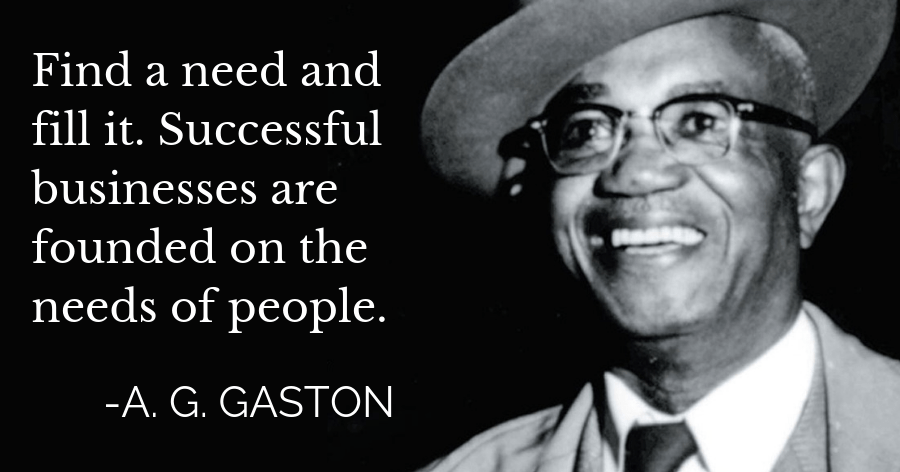
A.G. Gaston was born in 1892 in Demopolis, Alabama, a place where the echoes of slavery still shaped the air that Black people breathed. The economy had changed, but the rules remained the same. Black ambition was meant to be small, humble, and always in service to someone else. Gaston refused to live by those rules. He saw what too many people around him failed to see. Economic power was the key to freedom.
He built businesses that fed, educated, and buried Black people with dignity. He created a path for Black financial independence at a time when America was designed to keep Black labor cheap and Black dreams unreachable. His work did not just create wealth. It created infrastructure, the kind of institutions that made it possible for Black people to control their own futures.
Building Black Wealth as a Weapon
Gaston understood that poverty was not just about money. It was about control. A Black man who owned his own business did not have to beg a white boss for a job. A Black family that owned the land did not have to live under the thumb of landlords who could evict them at will. Power came from ownership, and ownership came from strategy.
In 1923, with only five hundred dollars, Gaston founded the Booker T. Washington Burial Insurance Company to provide Black families with dignified funeral services. White-owned insurance companies ignored or overcharged Black clients. Black communities were denied access to the very financial tools that allowed others to build generational wealth. Gaston knew that if Black people did not own their institutions, they would always be exploited by those who did.
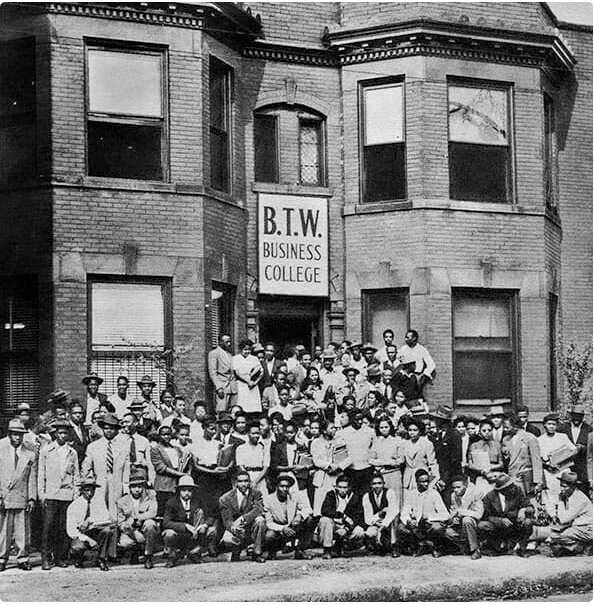
From there, he built an empire. He established a bank to provide loans to Black entrepreneurs shut out of white-owned financial institutions. He created a business college that taught Black students the skills of entrepreneurship and economic self-sufficiency. His funeral home ensured that Black families could bury their loved ones with dignity and without financial exploitation. His motel became a safe haven for Black travelers in a time when segregated America refused to accommodate them.
By the time he died in 1996 at the age of 103, his empire was worth over one hundred and thirty million dollars.
The Civil Rights Divide: Economics vs. Protest
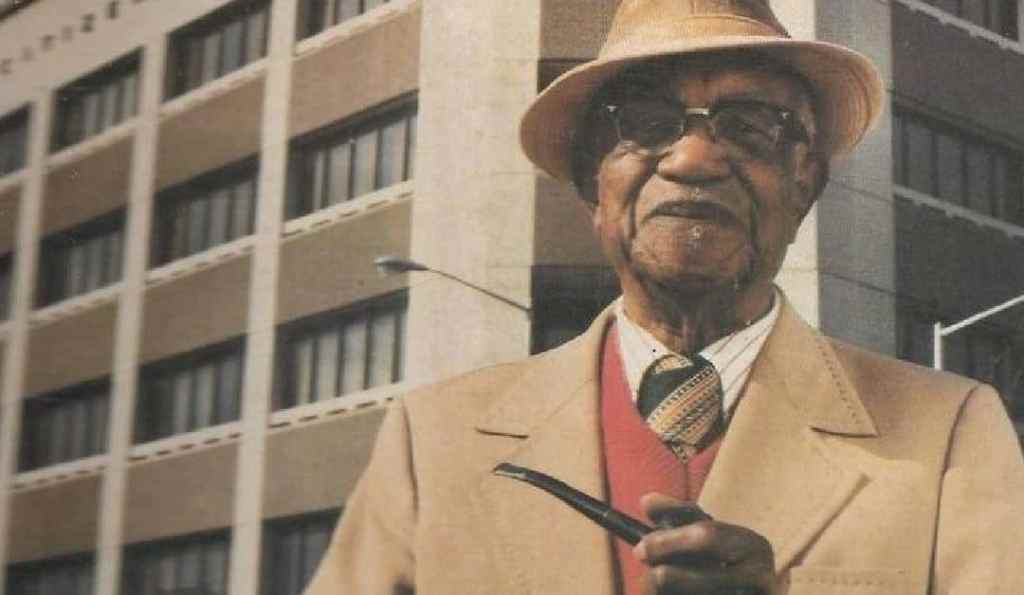
Gaston believed that Black financial power was the path to true liberation. He saw wealth as the key to breaking the cycle of oppression. He built institutions that served Black people in an era where few others did. His success proved that Black communities could create their own wealth, their own businesses, and their own economies. He believed that economic independence would eventually force America to respect Black people.
His philosophy put him at odds with many civil rights activists. Leaders like Dr. Martin Luther King Jr. focused on dismantling segregation and achieving legislative victories. Gaston focused on economic power and self-sufficiency. He urged activists to negotiate rather than demonstrate. He feared that boycotts would financially harm Black businesses more than they would affect white institutions. His preference for economic leverage over direct confrontation created a rift between him and more radical elements of the movement.
He did not turn away from the fight despite his disagreements with activists. He provided financial support to civil rights leaders and opened his A.G. Gaston Motel as a planning hub for King and others. His motel was later bombed for its role in the movement, a reminder that even wealth could not insulate Black people from racist violence.
What His Legacy Means Today
Gaston’s beliefs remain at the heart of many debates in the Black community. Some believe that economic empowerment must come first, that ownership and financial independence are the only ways to secure lasting freedom, and that systemic barriers make it impossible to achieve true economic power without first dismantling the policies that keep Black communities oppressed.
Gaston’s legacy shows that both strategies must exist together. Protests can force immediate change, but without economic stability, communities remain vulnerable. Financial power can create independence, but it can be easily taken away without political and social protections.
Black businesses still struggle to secure loans, and homeownership rates for Black families remain lower than for White families. Corporations that market diversity often fail to invest in Black communities in meaningful ways. Gaston’s life proves that economic power is not given. It must be built, protected, and used strategically.
The blueprint exists. His life laid it out step by step. His story demands a question that has yet to be fully answered. Will Black communities own their futures, or will they remain dependent on systems never designed for them?
 Thoughts Processed