

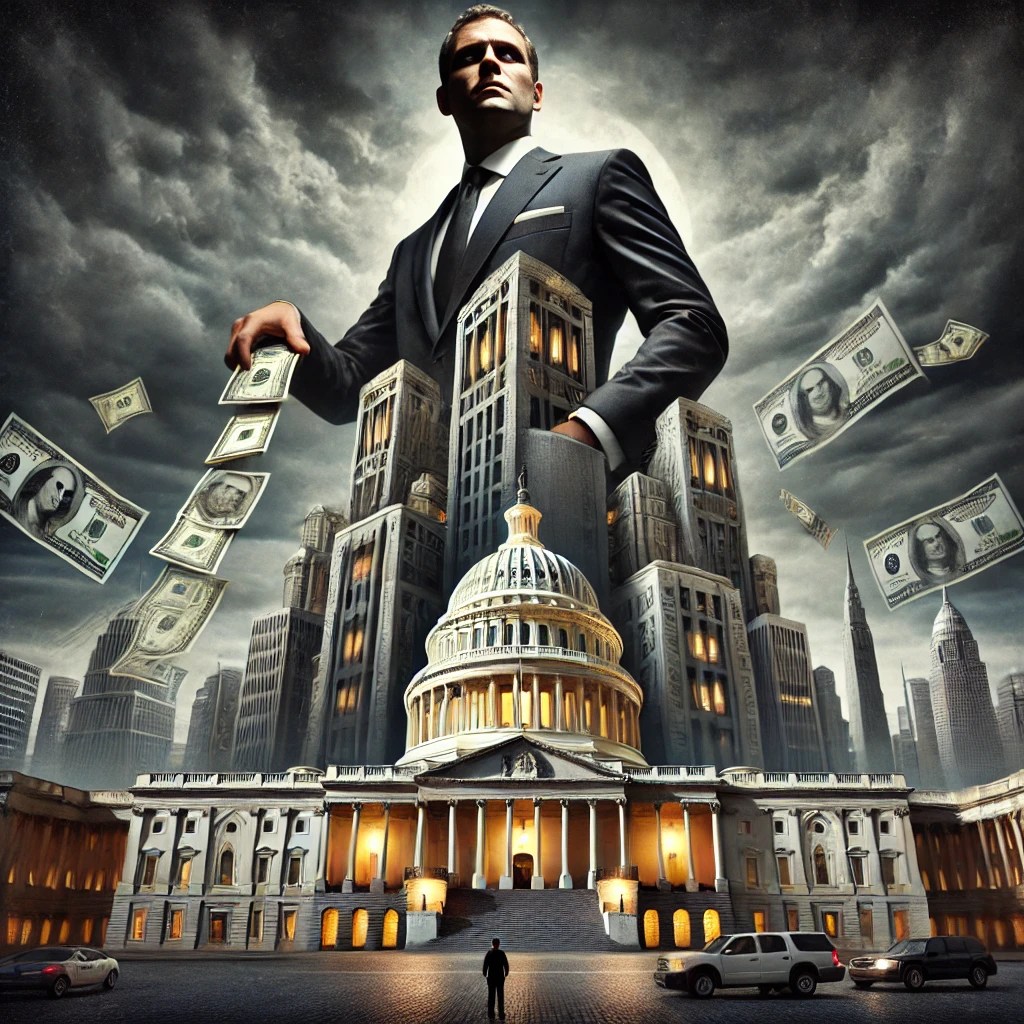
The story, it seems, was never about waste, fraud, or abuse. Not really. It was always about who has the power to name what is waste, who determines the scam, and who benefits from the abuse. A quiet calculus is at play, one that divides this nation into those who must be held accountable and those who, by their wealth and influence, are too big to be examined. Now, in the chambers of Congress, in the discourse of those elected to serve, we see this calculus play out in broad daylight.
It is not a problem that government spending is being audited. An effort to ensure taxpayer dollars are spent efficiently should be a standard function of governance. The issue is not with the concept of accountability but with who is in charge of that accountability. Elon Musk, a private individual with clear financial interests in the government contracts he oversees, has been given unprecedented control over federal oversight. This arrangement defies the basic principles of transparency and fairness. We must demand accountability in our government.
A Power Grab Unlike Any Other
Billionaires have influenced government for decades, often through lobbying, political donations, or indirect influence over policy. This situation, however, is different. This is not merely a case of a wealthy individual swaying politicians behind closed doors. This blatant consolidation of power places Elon Musk in direct control of government oversight. The scale and brazenness of this move make it unlike anything seen in modern American history.
Musk is not simply auditing government spending. He is profiting from it. Through various government contracts, including deals with Tesla and SpaceX, Musk makes millions each day while determining which agencies should be cut or restructured. Reports indicate that Tesla is poised to receive a $400 million armored vehicle contract from the State Department. This acquisition falls directly under the oversight of Musk’s Department of Government Efficiency. The conflict of interest is glaring. Each contract awarded to his companies represents taxpayer money funneled into Musk’s empire, reinforcing his influence over the government and the economy.

The Defense: A War on Bureaucracy
Supporters argue that the Department of Government Efficiency (DOGE) is not about consolidating power but about restoring democracy. They claim that DOGE aims to eliminate an entrenched, unelected bureaucracy that undermines the people’s will. This mission is framed as fixing a broken feedback loop between voters and the government, suggesting that a bureaucracy wielding unchecked power is more dangerous than the unchecked power of a single individual.
The argument is that the existence of a massive federal workforce that elected officials cannot remove erodes democracy. DOGE is presented as a necessary measure to ensure that elected representatives, not career bureaucrats, dictate policy. Supporters justify deep cuts by pointing to the federal deficit, arguing that the United States must reduce government spending to avoid bankruptcy. They highlight cases of alleged corruption within government agencies, pointing to examples of officials who have amassed significant wealth while working in public service.
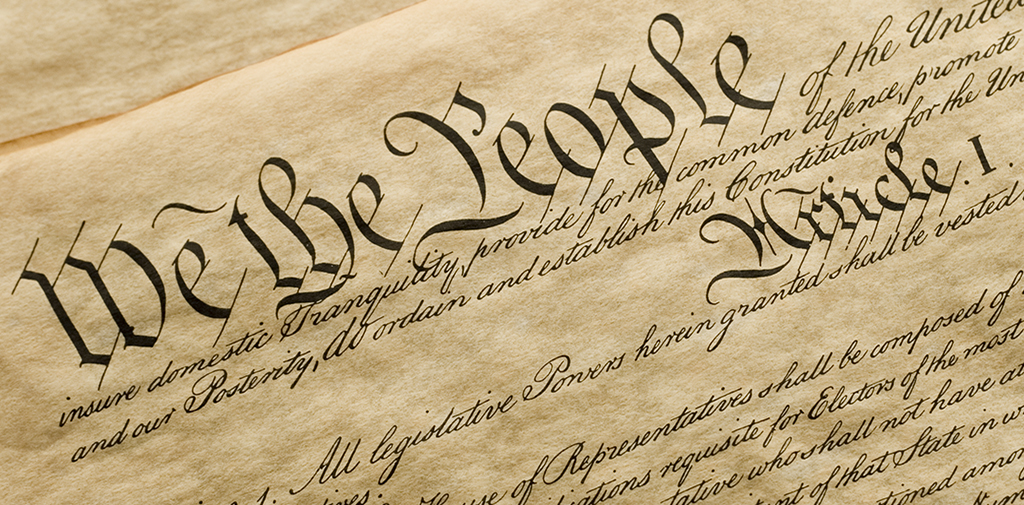
The Constitutional Violations at Play
The U.S. Constitution establishes clear guidelines regarding the separation of powers and the limitations on executive overreach. The Emoluments Clause explicitly forbids government officials from accepting benefits from external sources that could compromise their impartiality. Elon Musk’s role as a private business leader overseeing government contracts presents an unmistakable conflict of interest that should not be tolerated under constitutional law.
The Appointments Clause requires that principal officers of the United States be appointed by the President with the advice and consent of the Senate. This appointment bypassed that process, further questioning the legitimacy of this role. The Constitution was designed to prevent such an accumulation of power by ensuring government positions were filled through legitimate and accountable means.

Legal Challenges to This Authority
A coalition of fourteen states has filed a lawsuit challenging Elon Musk’s authority within the Department of Government Efficiency. The lawsuit, brought by Democratic attorneys general from states such as Arizona, Michigan, and Rhode Island, argues that Musk’s appointment and the sweeping powers granted to DOGE violate the Constitution. It highlights Musk’s unchecked influence in dismantling federal agencies and accessing sensitive government data.
Arizona Attorney General Kris Mayes stated that the nation’s founding principles are being undermined by allowing an unelected billionaire to wield such unchecked power. The lawsuit contends that President Trump violated the Appointments Clause by creating DOGE without congressional approval and granting excessive executive authority without Senate confirmation.
The legal challenges do not stop there. Additional lawsuits have been filed to block DOGE from making unilateral changes to government funding, terminating contracts, and making personnel decisions. The courts have already intervened, with a federal judge temporarily blocking DOGE from accessing personal data housed in the Treasury Department. Another lawsuit successfully paused an effort by the Trump administration to make deep budget cuts to federal research agencies.
A Pattern of Misinformation
Recent developments highlight a troubling pattern of misinformation. Elon Musk and Trump falsely claimed that Reuters received a Pentagon contract to engage in social deception. In reality, the contract was awarded during Trump’s first term to Thomson Reuters Special Services, a separate entity that develops technology to counter social engineering cyberattacks. This deliberate distortion of facts fuels public distrust in government institutions while distracting from legitimate concerns about unchecked power.
Another false claim suggested that DOGE prevented a fifty-million-dollar purchase of condoms for Gaza, only to later admit the information was incorrect. These repeated falsehoods raise concerns about credibility and the ability to wield such significant power responsibly.
An Unprecedented Power Grab
If Elon Musk’s role violates constitutional principles of separation of powers, conflicts of interest, and oversight, then it is absolutely imperative that action be taken immediately. The foundation of the U.S. government rests upon the integrity of its institutions, and permitting such blatant disregard for constitutional norms threatens the very fabric of democracy.
The United States is a constitutional republic, not a direct democracy, meaning that elected representatives are meant to act as stewards of government power on behalf of the people. The appointment of an unelected business magnate to such a powerful position raises serious concerns about whether the republic is functioning as intended. The consolidation of corporate and governmental power in the hands of one individual challenges the very system of checks and balances designed to prevent authoritarian control.
The question is not whether auditing government spending is necessary. The question is, why is Elon Musk the one cleaning up the books?
 Thoughts Processed