

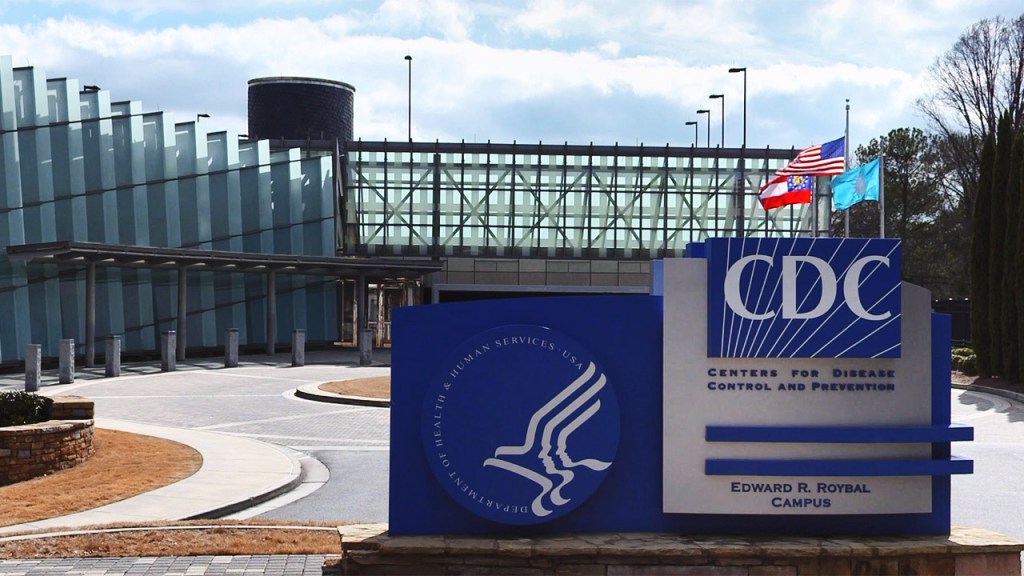
The impulse makes sense. If you believe politics have captured federal public-health leadership, you try to protect your people. Washington, Oregon, and California announced a new West Coast Health Alliance to issue their own recommendations, starting with immunizations, and Hawaii quickly joined. The stated goal is “science, not politics.” Governor’s Office of Washington+1Governor of California
This is not a good idea. Good intentions do not erase the costs of fragmenting national health guidance. The alliance may deliver short-term clarity for its own residents. It also risks long-term confusion, unequal access, and further erosion of trust.
The federal context is real and troubling
No one should minimize what has happened in Washington, D.C. Health and Human Services Secretary Robert F. Kennedy Jr. has overseen the ouster of CDC leadership and a wholesale shake-up of the vaccine advisory panel, ACIP. Multiple outlets report firings, resignations, and the replacement of experts with figures who have promoted vaccine skepticism. ReutersThe New YorkerKFF Health News
That chaos helps explain why West Coast governors made the move. It does not follow that a regional workaround is the safest fix.
Fragmentation creates public confusion
People already struggle to keep up with changing rules. The alliance plans to issue guidance that can differ from CDC recommendations. Even state leaders acknowledge the risk that “multiple voices with different opinions could confuse.” Media in the region are already publishing explainers to help residents sort out who to trust and what is covered. Diseases do not stop at state lines. Policies that drift further apart increase the likelihood that families, clinicians, schools, and employers receive conflicting messages. opb+1
Coverage and access hinge on ACIP
Insurance coverage in the United States is tied to ACIP recommendations. Under the Affordable Care Act and related rules, most private plans and Medicaid must cover ACIP-recommended vaccines at no cost. The Vaccines for Children program also keys off ACIP. If state guidance diverges from ACIP, coverage for some shots could become uncertain or vary by payer. That is a recipe for inequity. KFFCongress.govCenters for Medicare & Medicaid ServicesCDC
Reporters are already warning about potential confusion at pharmacies and unclear coverage this fall, with some states requiring ACIP guidance before pharmacists can administer vaccinations. A patchwork of state-by-state guidance will exacerbate that problem. The Wall Street Journal
Health systems run on national standards
Electronic health records, immunization registries, and pharmacy systems forecast shots based on ACIP logic. Those engines drive everything from school forms to point-of-care reminders. You can reconfigure software to follow a new regional standard, yet every divergence from ACIP multiplies cost and error risk across thousands of clinics and pharmacies. The more systems you ask to maintain parallel rule sets, the more mismatches and missed vaccinations you should expect. CDC+1NIST
Parallel guidance deepens polarization
The West Coast move will be read nationally as blue states going their own way, just as some red states are loosening or eliminating vaccine requirements. A split screen encourages more politics, not less, and gives extremists in every state a fresh excuse to ignore inconvenient science. Florida’s push to drop school mandates shows where this can head. A country that cannot agree on a measles schedule is a country that invites outbreaks. The Washington Post
Supply and logistics are national
OPB’s reporting floated bulk purchasing by the alliance as a possibility. That may help at the margins. It will not replace the scale, leverage, and distribution infrastructure built around federal standards. Manufacturers and distributors plan around national schedules and ACIP-driven demand. Fragmented buyers complicate forecasting and can lengthen the time between a recommendation and a shot in the arm. opb
What to do instead
- Stabilize national standards. Press Congress and the courts to restore a firewall around CDC and ACIP, then hold those bodies accountable in the open. Reuters
- Use the alliance for advocacy and communication, not for an alternative rulebook. Build plain-language guides that translate ACIP recommendations for residents, clinicians, and schools.
- Write coverage guarantees into state law that automatically adopt ACIP recommendations, so payers cannot cherry-pick. Pair that with targeted state purchasing where federal gaps appear. KFF+1
- Keep one playbook for data systems. Align immunization registries and EHR forecasting with ACIP to avoid costly parallel standards. CDC
Bottom line
The West Coast alliance is a principled response to a federal problem. It is also a risky precedent. Public health works best when the country speaks with one informed voice, updated in public, and insulated from political fashion. Build pressure to fix the national institutions rather than replace them. Residents deserve science that travels with them, from Spokane to San Diego, without changing at the state line.
 Thoughts Processed