

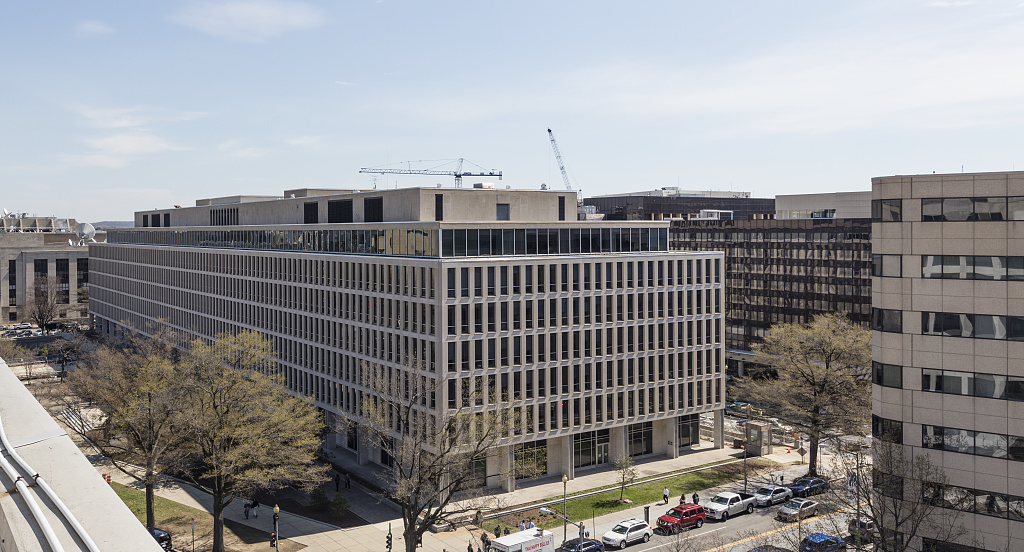
The federal government just pulled one of the most significant structural moves in public education in our lifetime, and most families will only feel it as a slow, confusing earthquake.
On November 18, 2025, the U.S. Department of Education signed six interagency agreements that move billions of dollars in K–12 and postsecondary grant programs to other federal agencies. The Department of Labor will now oversee some of the largest funding streams for K–12 schools, including Title I funds intended to support schools serving low-income communities. NBC4 Washington
This is not a minor reshuffle. It is part of an explicit project to dismantle the Department of Education itself and eventually shut it down. Spectrum Local News
People can argue whether that is good or bad. What we cannot afford to do is pretend it will not touch kids, teachers, special education, and local communities in very real ways.
What Just Happened, In Plain Language
For decades, the Department of Education has been the federal “home base” for
- Title I funds for low-income schools
- Special education oversight through IDEA
- Civil rights enforcement in education
- A huge web of competitive grants, technical assistance, and compliance monitoring
Now, through these agreements, many of those grant programs are being reassigned to other agencies. Title I and other large K–12 programs are being shifted to the Department of Labor. Other pots of money will flow through Health and Human Services, Interior, and State. NBC4 Washington
On paper, federal officials keep repeating that “the money is still there.” Technically, that is true. Congress still controls the appropriations. The concern is not only about whether funds exist. It is about who is watching, who understands schools, and who has the staff and mission to protect students when states or districts fall short.
Special Education Is Already In The Crosshairs
Before these agreements were signed, the Department of Education had already undergone significant layoffs. Entire offices faced being “virtually wiped out,” including the office that oversees special education programs. Reports indicated that out of roughly 80 to 90 staff in the Office of Special Education Programs, fewer than five might remain if cuts went through. Education Week
At the same time, advocates warned that 8.5 million students with disabilities could lose access to resources, monitoring, and support that come from that federal infrastructure. Straight Arrow News
A federal judge temporarily blocked some of the layoffs aimed at gutting the special education office, buying time but not erasing the intention or the direction. Disability Scoop
Now layer this new shift on top. You have
- A department that has already tried to thin out its special education capacity
- Programs are being scattered across agencies that do not have deep histories in IDEA enforcement
- Staff reassignments and uncertainty about who does what, for how long, and with what authority
The risk is simple. When something goes wrong for a student with disabilities, it becomes harder to know who is responsible, who will answer the phone, and who has the power to make a district fix it.
Dismantling Without A Blueprint
You can shut down a department with a pen and a press conference. Building a better system takes more than that.
If the argument is that the Department of Education is bloated, too centralized, or ineffective, then the honest next step should be to show the public a clear blueprint for something better. That blueprint should answer questions like
- How will special education rights be monitored and enforced
- How will civil rights complaints be handled
- How will smaller districts get technical assistance
- How will parents navigate a system that now lives across multiple agencies
So far, what we have is a lot of language about “returning power to states” and “reducing federal bureaucracy,” while the practical details fall on the back end. People closest to the classroom are left to figure it out in real time.
What This Means On The Ground
For families, teachers, and students, the impact of this restructuring will not show up as a breaking news alert. It will show up as
- Delays in resolving complaints
- Confusion when parents ask, “Who do I call?”
- Slower responses to guidance and waivers
- Less clarity for districts that want to do the right thing but need direction
For students with disabilities and their families, this lands on top of challenges that already exist. Schools already struggle to find certified special educators, to write effective IEPs, and deliver services with fidelity. Many parents already feel like they need a law degree to get their child what is on paper.
When federal oversight weakens or scatters, it does not magically make states and districts more accountable. It usually does the opposite, especially for students who have the least political and financial power.
The Politics Versus The People

It is easy to frame this as “big government versus small government,” or “feds versus states.” That is the talking point level.
In real life, a Black parent of a child with autism does not care which federal agency owns the grant code. They care that
- Their child has an aide in the classroom
- The IEP goals are meaningful and measurable
- The school does not suspend their kid for behaviors tied to their disability
- Someone with authority steps in when the system fails
This moment raises a serious question. Is the federal government stepping back in a way that invites communities to build better local systems, or is it stepping back in a way that abandons the people who already fall through the cracks?
So What Do We Do Now
We cannot control federal moves from a school building or a neighborhood. We can control how we respond.
- Stay informed, not just outraged
- Read the details of what is being moved, who is in charge now, and what timelines look like. National advocacy groups, disability organizations, and education reporters will be critical translators in this moment.
- Tighten local accountability
- If federal enforcement is weakening, local organizing matters more. School boards, state education agencies, and local advocacy groups face consistent pressure to protect IDEA rights, civil rights, and funding equity.
- Document everything
- Parents, teachers, and advocates should document services promised, services delivered, and any failures in between. Paper trails become powerful when systems get murky.
- Build community capacity
- This is a time for community-based organizations, culturally grounded programs, and independent educators to sharpen their tools. People will come to us for navigation, translation of policy, and real help. We need to be ready.
Final Thought
This is not just about one department or one administration. It is about whether this country believes education is a public good that deserves stable, accountable infrastructure.
If you tear the house down, you owe the people a safer building, not a vacant lot with a “figure it out” sign.
Until that blueprint is tangible and visible, those of us in classrooms, community centers, and living rooms will have to be the scaffolding. We will have to hold the line for kids who do not get invited into these policy conversations but live with the consequences every school day.
 Thoughts Processed