

Washington extended special education eligibility so students can now receive services through the end of the school year in which they turn 22. That extra year is not a formality. It is a second chance to get transition right. If we treat it like storage, nothing changes. If we treat it like launch, we can use this time to build real adult lives, with real community connections, for students who have been surviving school instead of benefiting from it.
Tag: Mental Health
When The Ground Shifts Under Our Classrooms

The federal government just moved billions of dollars in education programs out of the Department of Education, framing it as a step toward “returning power to the states.” Behind that language sits a harsher reality. Special education offices have been gutted, key grants are being scattered across unfamiliar agencies, and families are being left to navigate a system that no longer has a clear front door. This moment demands more than outrage. It demands local organizing, documentation, and community based accountability to protect students who have always lived on the margins of the system.
Turning Stories Into Proof: How To Make Narrative Count As Data In Schools

Narrative is not the soft side of education. It is evidence. It is the living pulse inside the data we claim to honor. When a student finally asks a peer for help, when a family sees independence taking root at home, when a young person takes a step forward that no scoreboard will ever measure, those moments are the data. The job is not to shrink stories to fit spreadsheets. The job is to structure the story so clearly, so precisely, so truthfully, that no one can deny its weight. Story becomes measurement. Observation becomes evidence. Growth becomes visible.
Tracking Gen-Ed Minutes as Inclusion Proof: Who We Believe Our Children Are
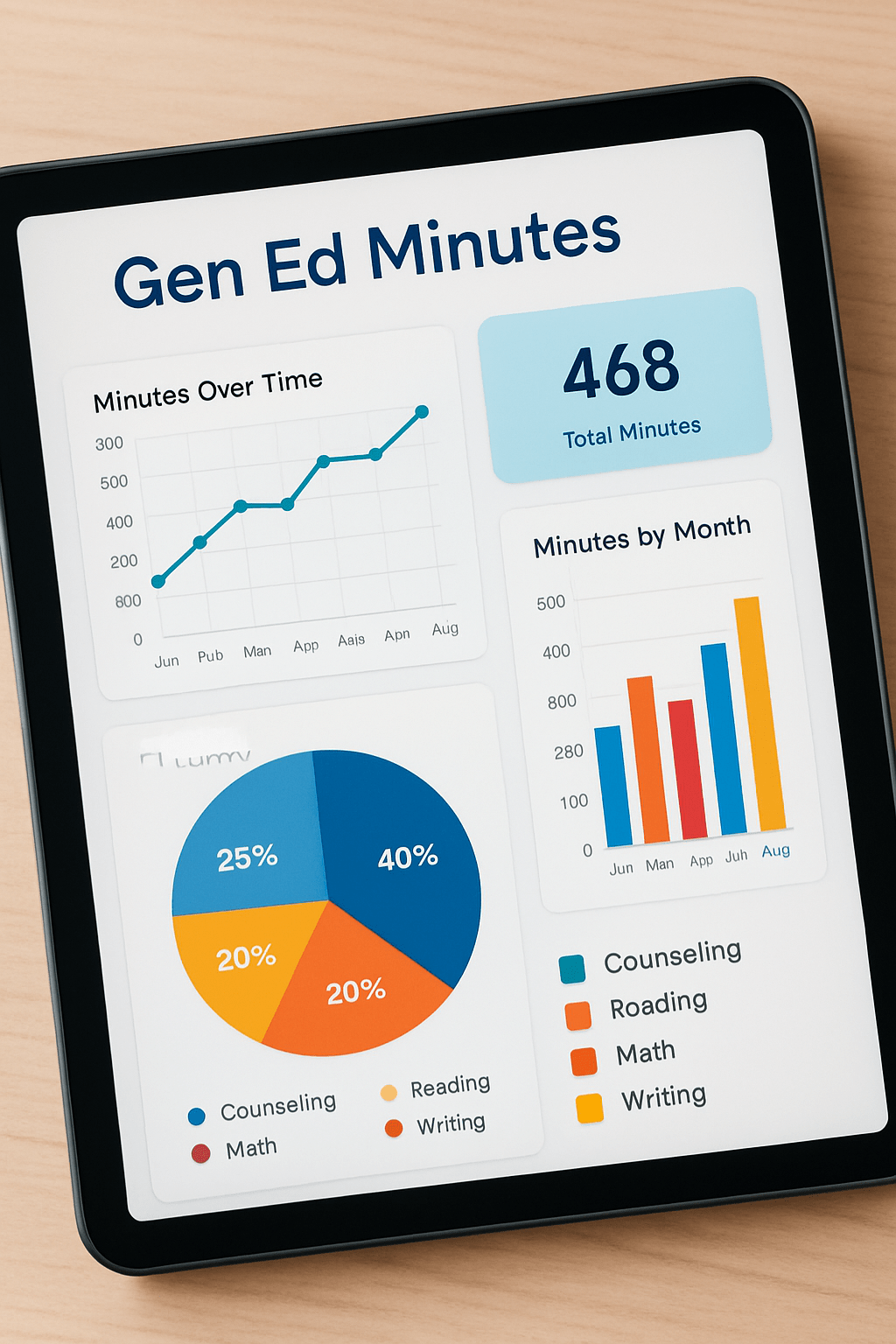
In every school building, there is a quiet arithmetic that tells the truth long before any mission statement does. It is not the language on the walls, not the slogans about excellence or equity. It is the simple count of where a child spends their minutes. Those minutes do not lie. They testify. For students with IEPs, general education minutes are not a small technical detail in a long document. They are a declaration of belief. They reveal whether a system sees a child as a full member of the learning community or as a visitor, escorted in and out of spaces where other children are presumed to belong by default. If we claim to believe in equity, then we must count the minutes where that equity is either practiced or denied. The minutes tell the story. Tracking them is how we decide to stop lying to ourselves about who our schools are truly built for.
When the Safety Net Frays: What Federal Layoffs Mean for Special Education
The U.S. Department of Education has begun laying off 466 employees during the federal shutdown, which is about one fifth of the agency’s remaining staff. Several offices that protect civil rights and support students with disabilities are among the hardest hit. Reports indicate that the Office of Special Education Programs is dropping from about 200 … Continue reading When the Safety Net Frays: What Federal Layoffs Mean for Special Education
If It Is Not Written, It Did Not Happen

If it is not written, it did not happen. Set a clean baseline for every IEP, build a five-day documentation rhythm, and use clear definitions that honor students. Clean data exposes gaps and drives better service.
Stress, Hostility, Depression, Hopelessness, and Job control
If your curriculum doesn't address these five areas, it does not address the psychosocial reality Black boys and men face. Whether they acknowledge it or not. To address some of these areas, you need more than a teacher. You need more than a therapist. You need an environment free from the constraints that traditional schooling … Continue reading Stress, Hostility, Depression, Hopelessness, and Job control
Student-Athletes and Mental Health
While there are resources for student-athletes, knowing when student-athletes need them can be challenging, so making these services available may not be enough. Whether it's individualizing and finding a way to add mental health checks to the yearly health check. Or just emphasizing mental health more and possibly creating a class or workshops for student-athletes to talk, learn, and reflect. It will help them off the court, and addressing mental health in athletes will also help them perform better in their respective fields of play.
Price of being Young, Black, and Gifted

There are many more examples, like Bob Gibson in baseball, Tiger Woods at Augusta, or Shaq in the modern-day NBA, to name a few more. This is not new, but her reaction to that adversity is compared to other great Black players I mentioned. Simone Biles, continue to be the fantastic athlete you are and do not allow them to determine or derail your greatness!
 Thoughts Processed