

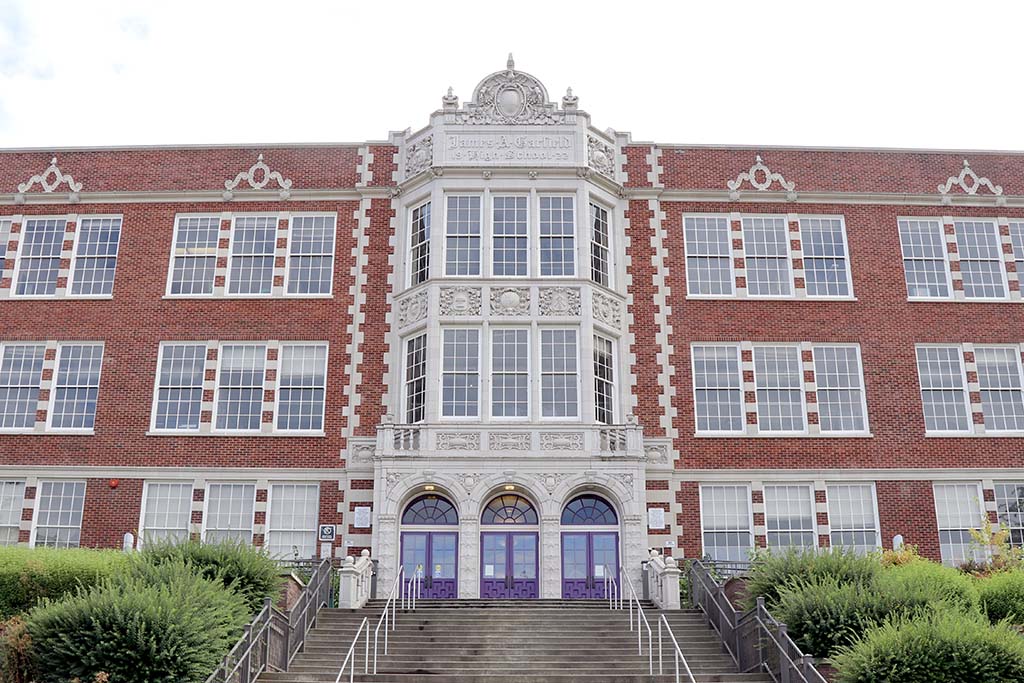
There was a time when Garfield High School stood not simply as a building in Seattle’s Central District, but as a living monument to a people’s endurance. It was a refuge for Black children who had little else in the city that belonged to them. It was a stage where culture, intellect, and athletic excellence could unfold freely. The banners in its gym told a story far greater than wins and losses. They spoke of presence. They told the story of a people who, though redlined and overpoliced, carved out beauty amid erasure.

What we are witnessing now is not a new story. It is a familiar script recast in institutional language. The dismissal of Brandon Roy and Roydell Smiley, both Garfield alumni and championship-winning coaches, is not merely a matter of staffing. It is the removal of memory. It is a quiet expulsion of tradition, done in the name of progress, without regard for the soil from which Garfield grew.
Principal Tarance Hart’s statement, offered in the language of administrative neutrality, speaks of “a new chapter.” This phrasing, though common in public relations, is rarely neutral in its consequences. It signals transition but conceals displacement. It reframes removal as rebirth while ignoring the cultural cost. In this case, two Black men deeply rooted in Garfield’s legacy have been removed without substantive community engagement, despite their proven success on and off the court.
Seattle Public Schools currently lacks a formal mechanism to prioritize students displaced by gentrification. There exists no tiebreaker for legacy, nor is there an enrollment policy that honors the children of families priced out of the neighborhoods they once built. Children who move due to skyrocketing rent or redevelopment are not granted preferential access to their historic school. Unless they qualify under specific exceptions, such as Highly Capable services or have siblings currently enrolled, their connection to Garfield is treated as incidental.
This absence of policy is not accidental. It reflects a broader national pattern, wherein displacement is treated as an economic inevitability rather than a political choice. The district has codified what it values, and generational ties to place are not among those values. In this calculus, history has no weight, and tradition is not a protected class.
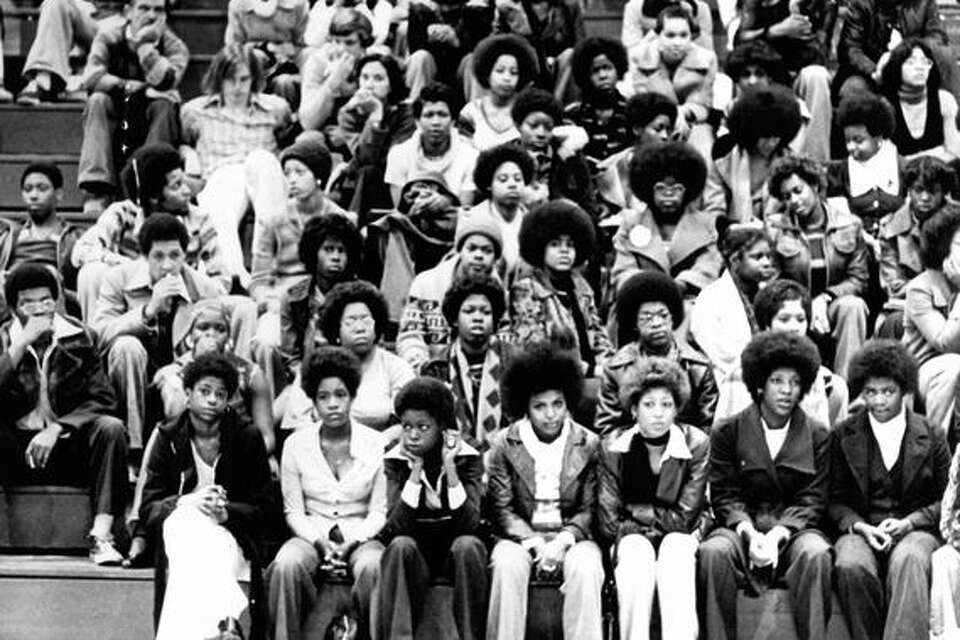
Athletic eligibility rules further entrench this displacement. Under new Washington Interscholastic Activities Association (WIAA) guidelines, students who transfer schools must sit out 40% of the season for any sport they previously played. This rule is meant to discourage recruitment. However, it fails to account for the many families who move not for competitive advantage, but for economic survival. Students whose parents could no longer afford the Central District are subject to the same penalties as those seeking athletic manipulation.
There are exceptions for students experiencing homelessness under the McKinney-Vento Act. These protections are critical, but limited. Most families affected by gentrification do not meet the federal definition of homelessness, even though their housing insecurity is a direct result of policy and market decisions beyond their control.
Brandon Roy’s removal is not disconnected from these dynamics. His presence at Garfield was not merely about basketball. It represented a bridge between the past and the present. He was a son of the school returning to give back, to mentor, to remember. His departure, alongside Smiley’s, marks a shift not only in leadership but in values. It raises the question of whether Garfield still seeks to reflect the community that grew it, or whether it now answers to a different constituency, one less concerned with history and more aligned with image.
It is not enough to call for change. The mechanisms of policy must be reshaped to account for those whose labor built the culture we now seek to professionalize and sanitize. Seattle Public Schools must establish a tiebreaker for displacement within its enrollment system. This would recognize the historical bonds between students and schools in neighborhoods affected by economic expulsion. It would not guarantee admission, but it would grant priority to those whose families were effectively priced out.
Similarly, the WIAA must amend its transfer policies to allow for a displacement-based hardship exemption. Families facing forced relocation due to rent increases or redevelopment should not be punished under rules designed to police athletic recruitment. Students should not have to choose between maintaining ties to their cultural and academic roots and fully participating in their school’s extracurricular life.
There is a phrase often used in communities affected by gentrification: “We didn’t leave. We were removed.” The same might be said of what is happening at Garfield. What is at stake here is not simply who coaches the boys’ or girls’ basketball team. What is at stake is the right of a people to remain connected to the institutions they nurtured.
In failing to honor that connection, we lose more than policy battles. We lose memory. We lose continuity. We lose the very thing that made Garfield more than just a high school.
If Garfield is to remain a place of meaning, it must remember its identity. It must remember who made it. Otherwise, the banners will hang over a gym full of strangers.
 Thoughts Processed
This whole situation reeks or tRumpism Racism and reverse DEI. If they hire WHITE coaches to replace our proven Black Coaches/Leaders then we know the REAL truth. The school district should NOT be allowed to arbitrarily make decisions/changes in the Athletic Departments UNLESS there is at least a SHADOW of inappropriate actions. They are now trying to use “cancel culture” against my beloved Alma Mater. We need to STAND UP Bulldogs WHEREVER you are. We can’t let them tarnish destroy or wipe out OUR LEGACY!!!
LikeLike
Your well written article failed to explain the reason why the entire basketball coaching staff was removed. It cannot be for the reasons aforementioned.
LikeLike