

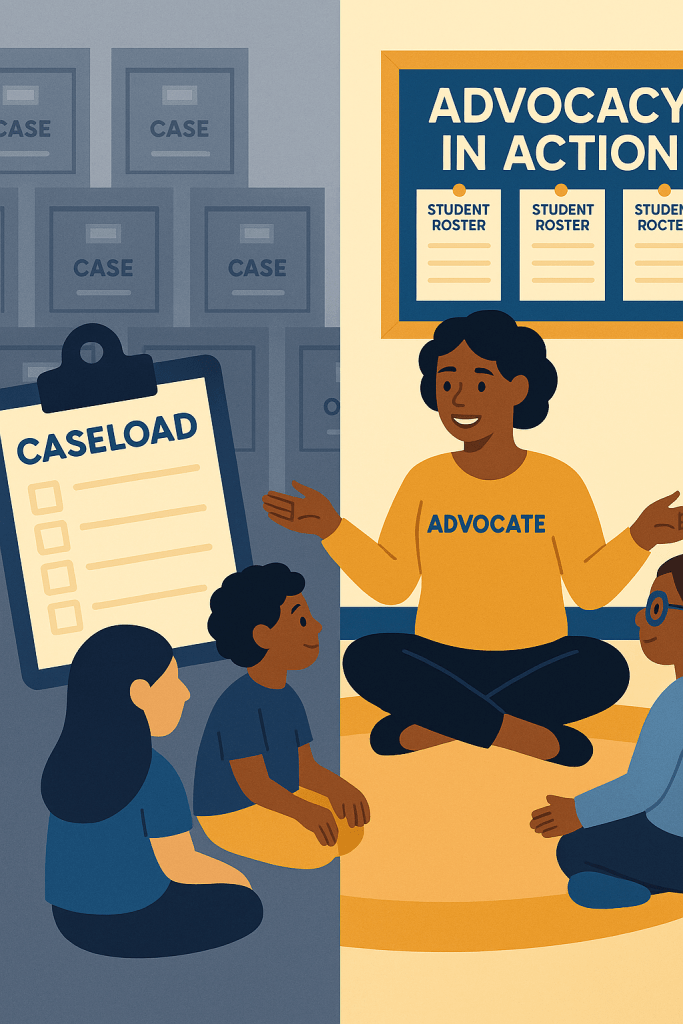
In Special Education, language is everything. The terms we use carry weight, reflect ideology, and shape how we see our students, and how they see themselves. Too often, the language baked into our profession carries the residue of systems more aligned with surveillance and control than with empowerment and liberation. It is time we interrogate that language, challenge it, and ultimately, change it.
Let’s start with one of the most commonly used terms in Special Education: Case Manager.
A case is something assigned. A number. A file. A problem to be handled, not a person to be understood. When we refer to ourselves as Case Managers, we unknowingly reduce our students to caseloads and compliance checklists. This terminology did not emerge from an educational philosophy rooted in equity or care. It came from bureaucratic systems that often overlap with those used in criminal justice, foster care, and mental health institutions. In fact, the similarities between SPED documentation and parole files are disturbing, from Individualized Education Programs (IEPs) to behavioral monitoring protocols. Let’s not sugarcoat it. This is a clear indication of a connection between SPED and the criminal justice system.
Words like case, load, and management reek of institutional thinking. They imply burden and objectivity rather than connection and humanity. Contrast that with general education, where teachers have rosters. That term at least nods to the idea that these are students, not files to be processed. Why is there such a stark linguistic difference between the classroom next door and ours?
Language shapes identity. When students hear that they are part of someone’s “caseload,” what message does that send? When they see their teachers referred to as managers rather than educators or advocates, what does that teach them about their own worth?
I have stopped using the term Case Manager. I refer to myself as an Advocate. That is what I am. That is what we should all be. Advocacy is active. It implies that I will speak up for my students, push back against systems that marginalize them, and work to ensure that their educational experience is meaningful and dignified.
To advocate is to resist.
To manage a case is to comply.
We must shift this language if we are serious about equity in education. Every time we reinforce carceral terminology in Special Education, we build another invisible thread tying our students to systems of confinement rather than liberation.
So here is the challenge:
Stop saying Case Manager. Start saying Advocate.
Stop saying Caseload. Start saying Student Roster.
Stop reducing students to files. Start recognizing them as people.
Words matter. Especially for our students, many of whom are Black, Brown, neurodivergent, linguistically diverse, and navigating systems that were never built for them to thrive. The least we can do is honor their humanity in how we speak about them.
This is not semantics. This is praxis.
Changing language is not just about being politically correct. It is about shifting culture. It is about reclaiming the dignity of our students and restoring the purpose of Special Education: to support, to empower, and to advocate.
Let’s write a new narrative, one word at a time.
 Thoughts Processed