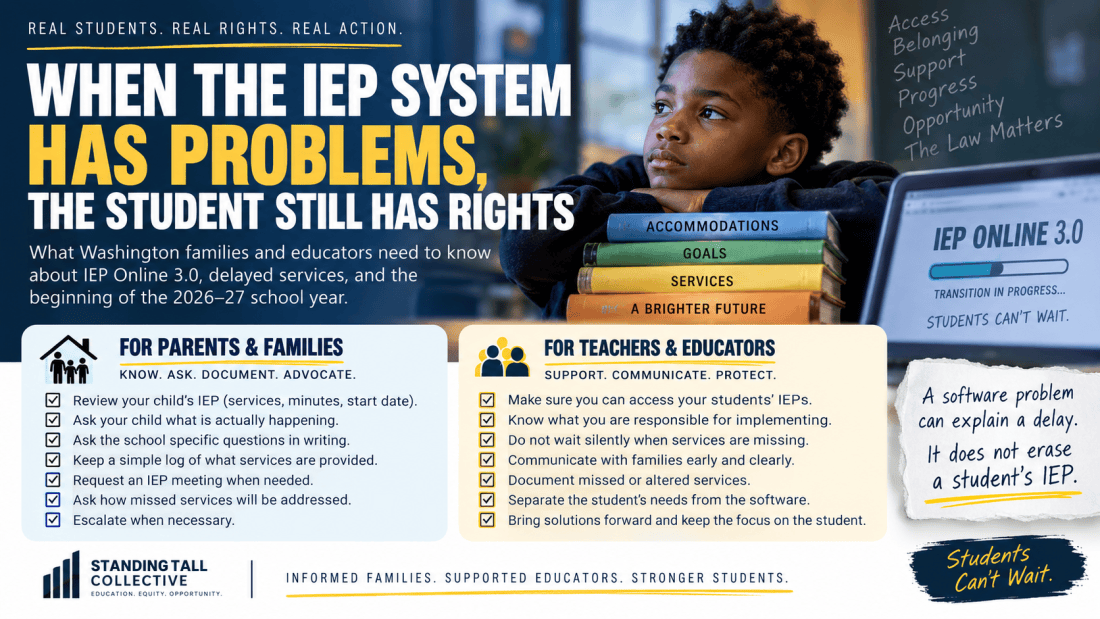

Washington schools are navigating the transition to IEP Online 3.0, but technology problems do not erase a student’s IEP. This guide gives families and educators practical steps to identify missed services, document concerns, communicate effectively, and keep IEP implementation focused where it belongs: on the student.
Tag: accessibility
Make IEP Meetings Strategic
An Individualized Education Program meeting should run like a strategy session. Share the agenda early, review data together, write plain language goals, and leave with a 30 day plan that names actions, owners, and dates. Families walk out knowing exactly what happens next.
Family Partnership Is a Cadence
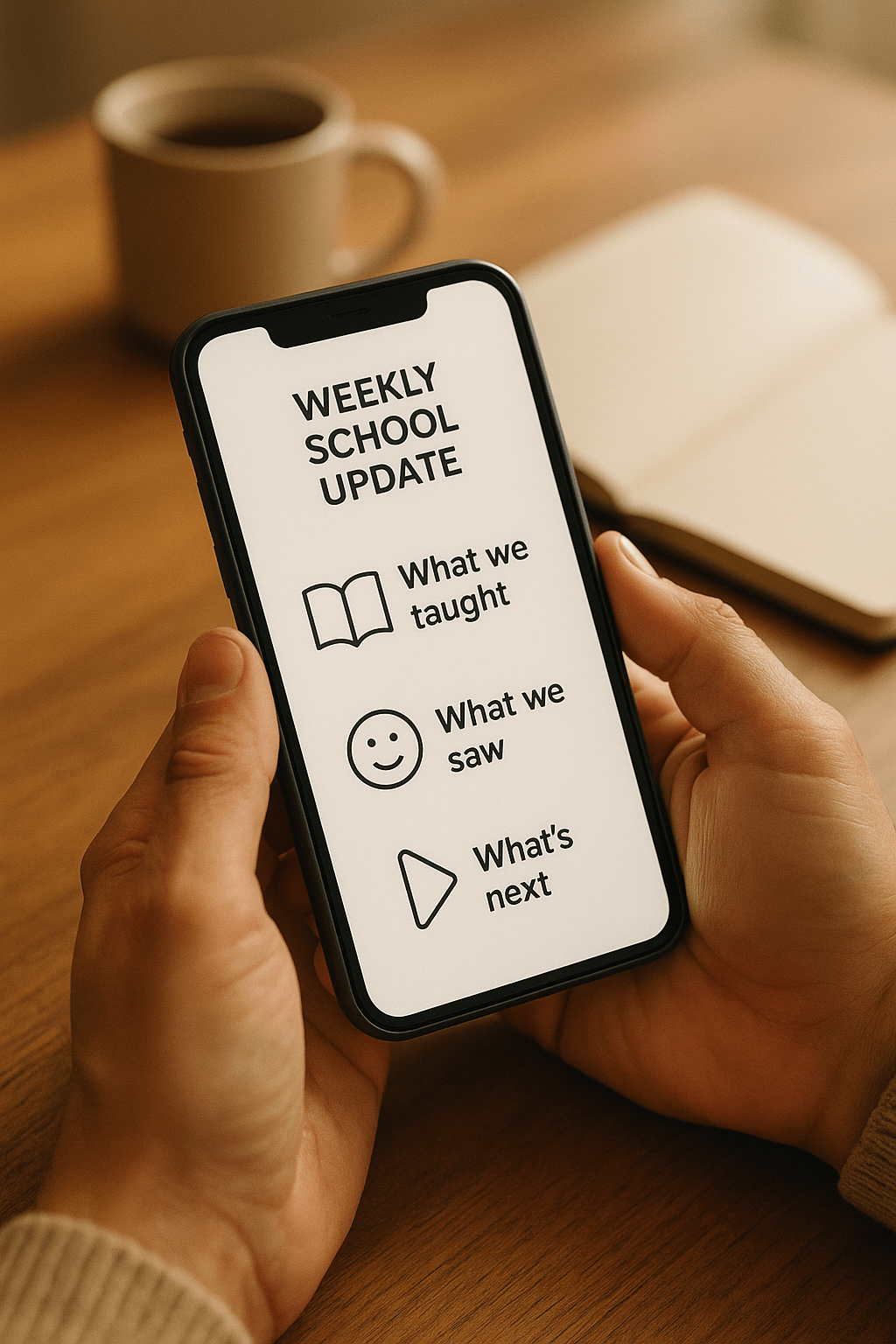
Family partnership is a steady rhythm, not a single meeting. Share a weekly, plain language update that explains what was taught, what you observed, and what comes next. Add one clear way families can help, then repeat it every week.
Should Teachers Allow Students To Use ChatGPT? Yes, With Purpose, Guardrails, And Age-Appropriate Scaffolds
Teachers should allow ChatGPT with purpose and guardrails. Use it for brainstorming, reading support, feedback, and study help, not to produce final drafts. Start with teacher-led demos in K to 2, guided small-group use in grades 3 to 5, limited independent use with checks in grades 6 to 8, and accountable independent use in grades 9 to 12 and college. Keep equity, privacy, and visible thinking at the center.
We Are Pricing Ourselves Out of Hoops
Coaches helped because they believed in players, not because they saw them as a check. Gyms were open, and kids had real opportunities to develop without paying for exposure. Now, trainers charge hundreds, teams cost thousands, and even getting in the gym has a fee. This is not about saying people should not get paid. It is about asking, who is really benefiting?