

Seattle’s basketball identity did not emerge through coincidence. It was crafted by individuals who approached the game not only with skill, but with vision. Among those builders stood Coach Dave Belmonte. His work across schools and sidelines helped lay the blueprint for what high school basketball became in the city.
His legacy is felt not only in records but in rituals. Players who learned under him still close out with purpose, communicate on defense, and understand that discipline shapes talent.
David Belmonte graduated from O’Dea High School and continued his academic and athletic career at Seattle University. Upon completing his studies, he began teaching history and coaching basketball, often simultaneously, treating the gymnasium and the classroom as complementary arenas. His coaching voice was calm, consistent, and deeply principled. His pedagogical style mirrored that same intentionality. His lessons in history were as focused on content as they were on comprehension. He wanted students not only to understand what happened, but why it mattered.
In 1992, Bellevue High School named him head basketball coach. At the time of his appointment, The Seattle Times offered a concise summary of his achievements: “His Franklin teams went 247–154, won three Metro titles, reached the state tournament four times, and finished fifth in 1983, the year he was Metro Coach of the Year and Sea-King AAA District Coach of the Year” (Seattle Times Archive, 1992). These numbers reveal success, though they only partially account for his significance. His presence shaped the landscape.
Over the course of twenty-one seasons, Belmonte amassed a career record of 278 wins and 186 losses. The Washington Interscholastic Basketball Coaches Association (WIBCA) lists him among the state’s most enduring coaches. His influence was not bound to a single school. He coached across boys’ and girls’ programs, moving where the district needed him most. His name appears in multiple archives, including those of Roosevelt, Franklin, and Garfield, as well as Bellevue, not as a guest, but as a constant.
His tenure at Franklin High School remains a defining chapter in Seattle’s basketball story. His teams were reliable, disciplined, and detail-oriented. They represented a brand of basketball that traveled across the Metro League. That 1983 fifth-place finish remains a historical marker, not because it resulted in a trophy, but because it reflected the character of a team coached the right way.
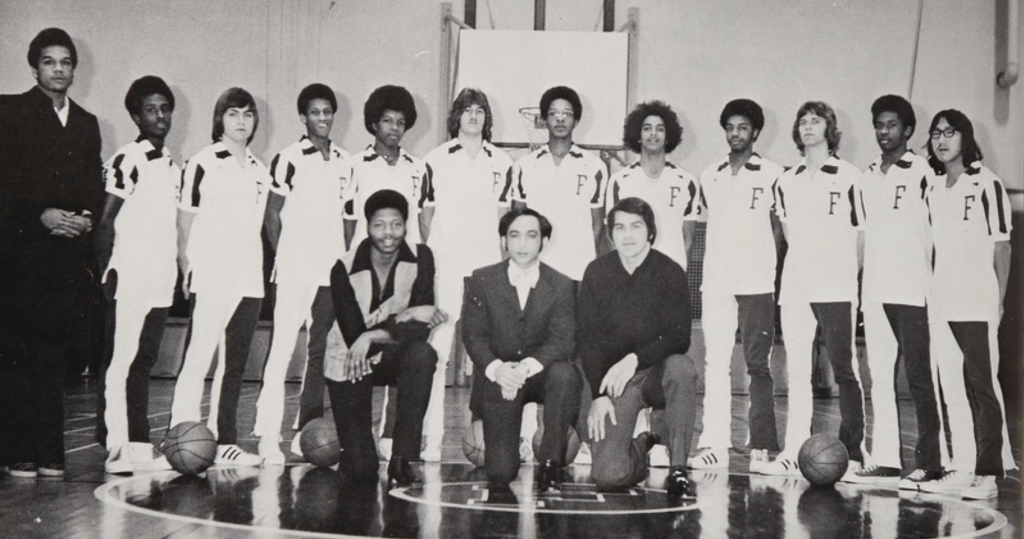
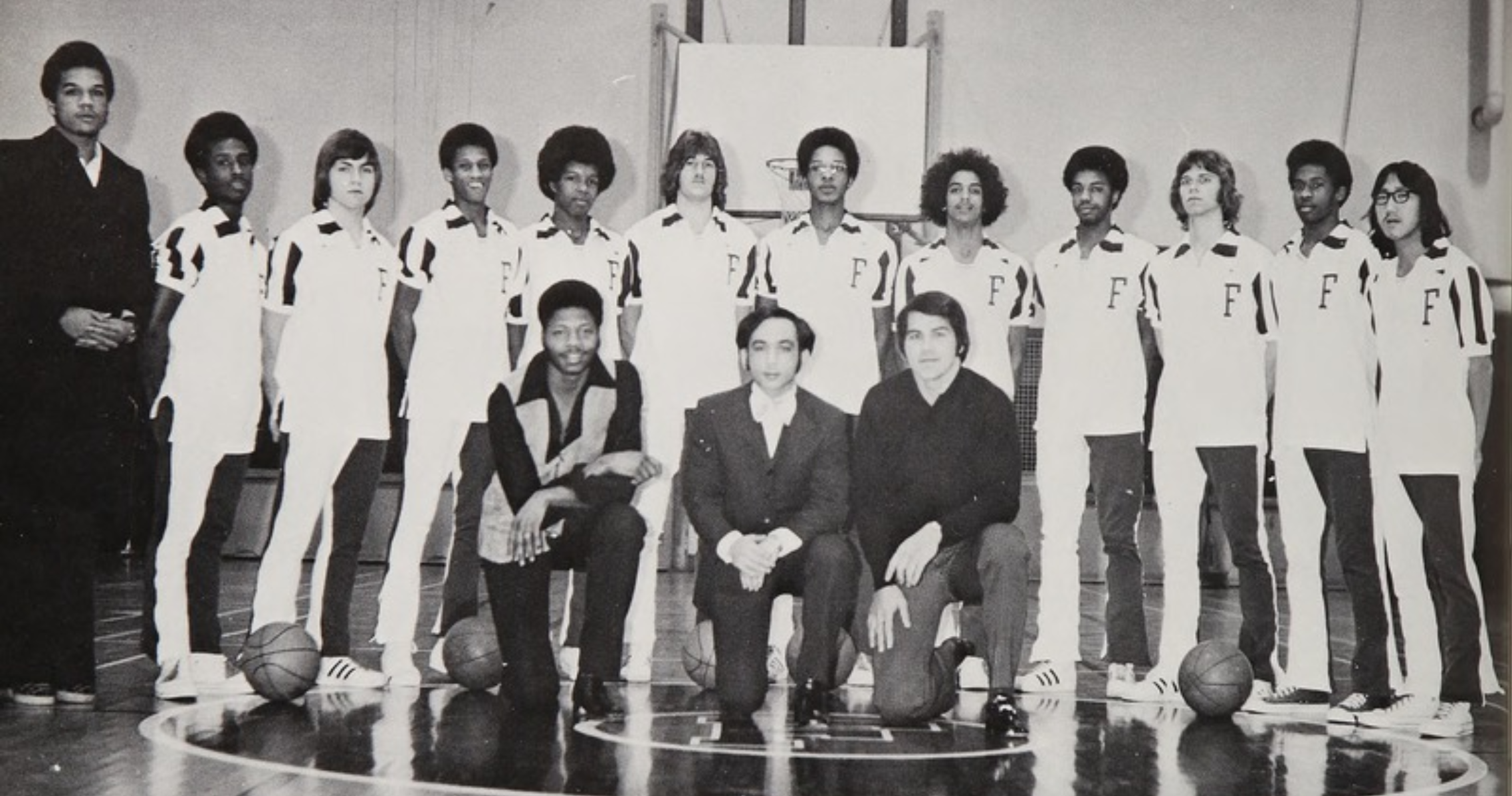
Coach Belmonte also cultivated one of the most important coaching trees in the Pacific Northwest. In Franklin’s 1974 yearbook, three names appear beneath his: Mike Bethea, Wayne Floyd, and Trent Johnson. Each would go on to lead at a high level. Floyd later served as Belmonte’s assistant for more than a decade. In 1996, Garfield High School hired Floyd as head coach. Two years later, Floyd and Belmonte stood together on the bench as Garfield won the 1998 4A state title, with Floyd at the helm and Belmonte as his assistant (Seattle Times Archive, 1998). That title was not just a win. It was a reflection of continuity and trust.
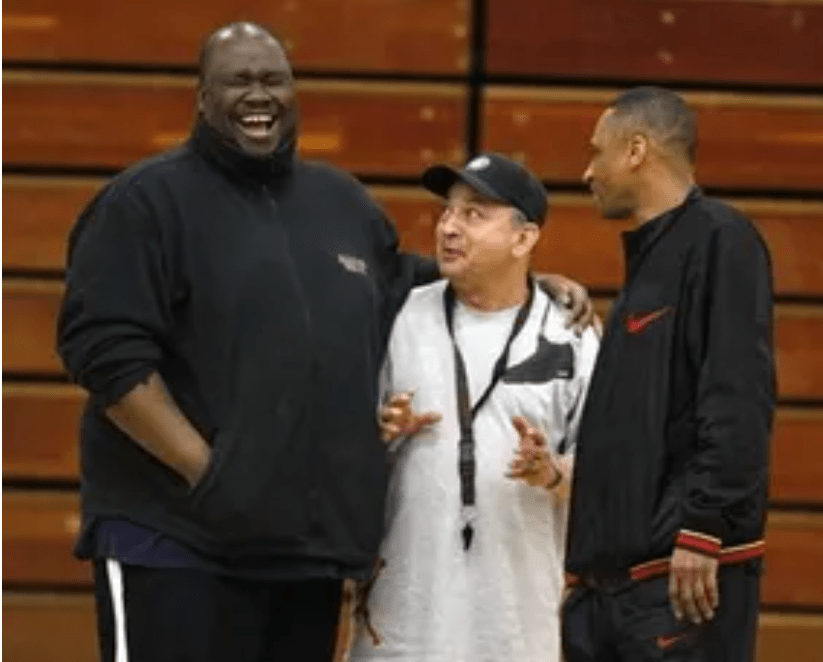
Mike Bethea, also a former player under Belmonte, would lead Rainier Beach High School into an era of state dominance. Belmonte returned to the sideline with him as an assistant coach. His contributions were officially acknowledged in the King County Council’s 2016 resolution and again in the WIAA’s 2018 state tournament materials (King County Council, 2016; WIAA, 2018). These appearances were not ceremonial. They were earned through decades of sustained commitment to the game.
Trent Johnson extended Belmonte’s influence onto the national stage. He would later serve as head coach at four Division I programs: Nevada, Stanford, LSU, and TCU. The reach of Belmonte’s coaching philosophy is visible in each of these trajectories. His mentorship shaped men who carried Seattle basketball into the future.
I played for Coach Belmonte when he was an assistant at Garfield in 2000 and 2001. He was measured, confident, and exacting. He taught with precision. His expectations shaped how I saw the game and how I saw myself. Everything had a purpose. His presence in that gym was an extension of the foundation he had already built across the city.
His whole career cannot be captured through a single stat line. It lives in players who became leaders, in coaches who carried his voice into huddles, and in a basketball culture that still echoes his values. Coach Dave Belmonte gave Seattle more than a few good teams. He gave the city a standard. His work reminded us that basketball, when done right, can build character, foster clarity, and create legacy.


Thank you Anthony, I can’t tell you how much I appreciate your kind words for my brother. I truly appreciate your kind words and cherished memories for him. David loved all of you kids, speaking of the love he had for his basketball players and coaching staff often over the years. You all were part of his family! He would have loved this Anthony, thank you! Drena Acena (Belmonte)
LikeLiked by 1 person
Drena, I am so sorry for your loss. Please know my thoughts and prayers are with you and your family. Coach meant so much to all of us, and I am grateful for the love and wisdom he shared. He will always be remembered not only as a coach but as family to so many of us who had the privilege to learn from him.
LikeLike
Beautifully written tribute.
LikeLiked by 1 person
Jeanine, thank you for your kind words. Coach Belmonte set a standard in this city that will never be forgotten, and I just wanted to make sure his legacy is honored.
LikeLike
Anthony — are there plans to have this celebration live-streamed – either in part or in full?
Thank you – FHS 80 alumni
LikeLike
Thank you for such a great article. This city has an incredible legacy, thanks for keeping it alive. I played and coached against Dave, a class act to say the least. Is that RJ, Coach Johnson, in the team picture? He became an assistant coach my sophomore year at the UW. He joined Denny Houston and coach Harshman and had an inspiring effect on the team that year that made it to the NCAA Tourney.
LikeLike